Role QA
Overview
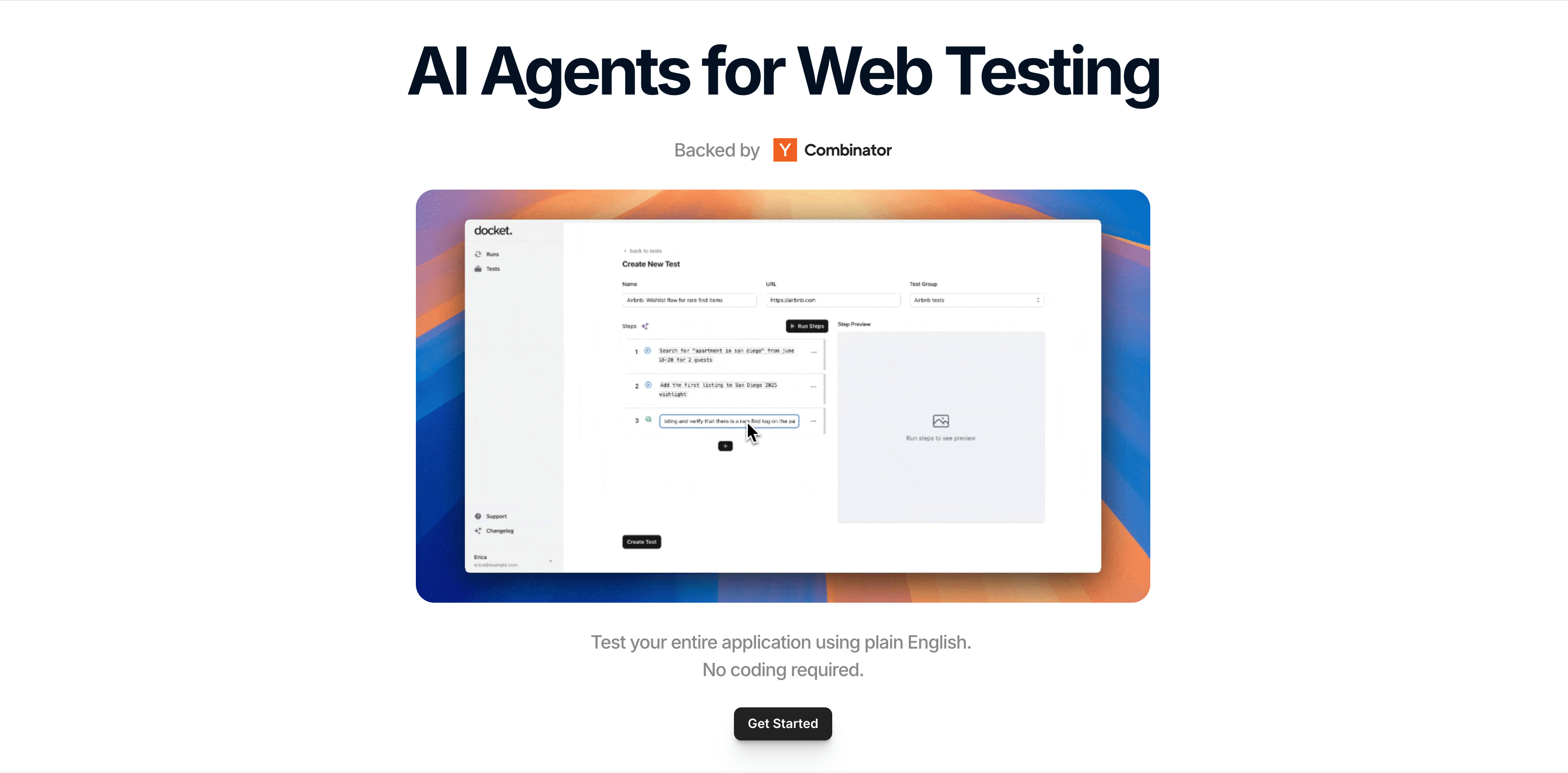
Docket is an AI-powered platform designed to automate QA testing for web applications. It allows teams to create, run, and manage tests using natural language, eliminating the need for coding.
Key Features:
- AI Agents for Web Testing: Utilizes AI to automate testing processes.
- Natural Language Testing: Enables users to test applications using plain English, without requiring coding.
- Intelligent Stability: Interacts visually with applications using a real browser, adapting to UI updates and eliminating reliance on DOM selectors, XPaths, or Playwright scripts.
- Easy to Maintain: Adapts tests to UI changes, suggests new tests for evolving features, and continuously flags real bugs.
- Vision-based AI: Understands the application visually and semantically, similar to a human.
- Automated Test Execution: Handles the execution of tests.
- Actionable Reports: Generates reports that provide insights into test results.
Use Cases:
- Automating QA testing for web applications.
- Creating and managing test suites without coding.
- Detecting various types of bugs, including broken flows, payment errors, authentication problems, and unexpected behaviors.
- Empowering any team member to create tests using natural language.
Benefits:
- Saves Time: Empowers team members to create tests quickly using natural language, makes tests resilient, slashes maintenance through automatic updates, and handles test execution and reporting.
- No Coding Required: Simplifies test creation and management for non-developers.
- Resilient Tests: AI makes tests resilient to UI changes, reducing maintenance effort.
- Continuous Bug Flagging: Automatically flags real bugs as they occur.
- Comprehensive Bug Detection: Catches issues that impact users, categorizing them by severity.
- Simplified Onboarding: Provides guided onboarding and initial test suite building by the Docket team.
Capabilities
- Automates QA testing for web applications
- Creates test cases using natural language input
- Runs and manages tests for web applications
- Interacts visually with applications, mimicking user behavior
- Adapts tests to UI updates, ensuring test resilience
- Suggests new tests for evolving features
- Continuously flags real bugs
- Understands applications visually and semantically, including objectives and test criteria
- Detects user-facing issues such as broken flows, payment errors, authentication problems, and unexpected behaviors
- Categorizes issues by severity, from critical failures to minor bugs
- Generates actionable reports
- Empowers team members to create tests without coding
- Reduces maintenance efforts by automatically suggesting smart updates for tests